Tech Neck and Neck Pain in Singapore: Causes, Symptoms, and How Osteopathy Can Help
Feb 25, 2026
If you've ever finished a long day at your desk and felt that familiar ache creeping up from your shoulders to the base of your skull, you're far from alone. Neck pain is one of the most common complaints we see at Back in Health Osteopathy Singapore — and in a city where long working hours, packed MRT commutes, and late-night scrolling are just part of life, it's little wonder why.
In this article, we'll explain what's actually happening in your neck when it hurts, why "tech neck" has become such a widespread problem in Singapore, what symptoms to watch out for, and how osteopathic treatment can help you get lasting relief.
What Is Tech Neck (And Why Is It So Common in Singapore)?
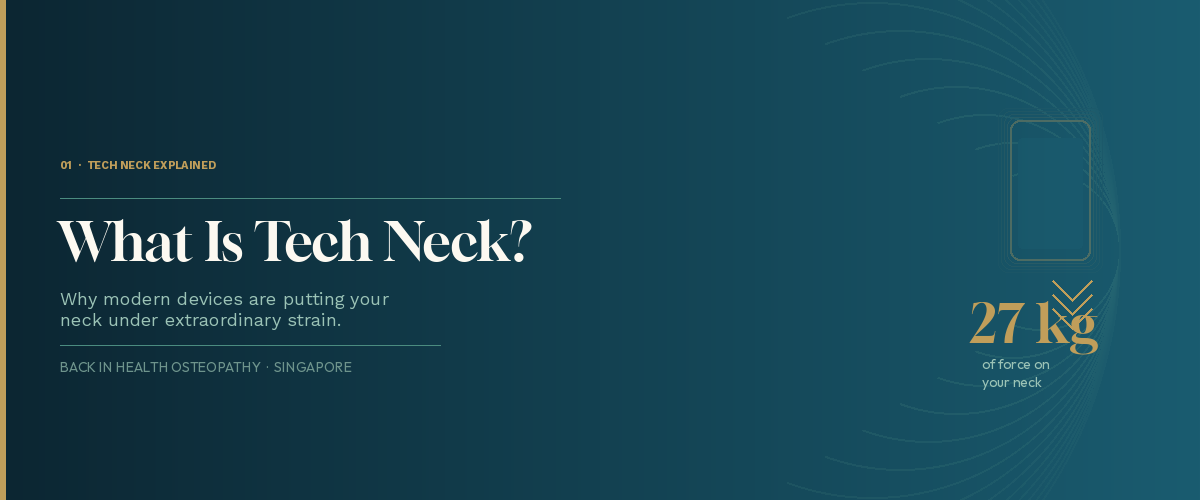
"Tech neck" — sometimes called "text neck" — refers to the strain placed on the neck and upper spine from repeatedly holding your head in a forward, downward position. Whether you're hunched over a laptop at your desk, scrolling through your phone on the train, or sitting in a Zoom meeting for the fifth hour in a row, your neck is under considerable stress.
Here's the physics behind it: your head weighs around 5–6 kg when it's sitting directly over your spine. But for every inch your head tilts forward, the effective load on your neck more than doubles. By the time your chin is near your chest — the classic "looking at your phone" position — your neck muscles may be supporting the equivalent of 20–27 kg of force. Over hours, days and years, that adds up.
Singapore's workforce is particularly susceptible. With one of the longest average working hours in Asia and near-universal smartphone adoption, the combination of desk work and device use creates an almost perfect storm for neck pain. It's not a personal failing — it's a structural problem that needs a structural solution.
Common Symptoms of Tech Neck and Neck Pain
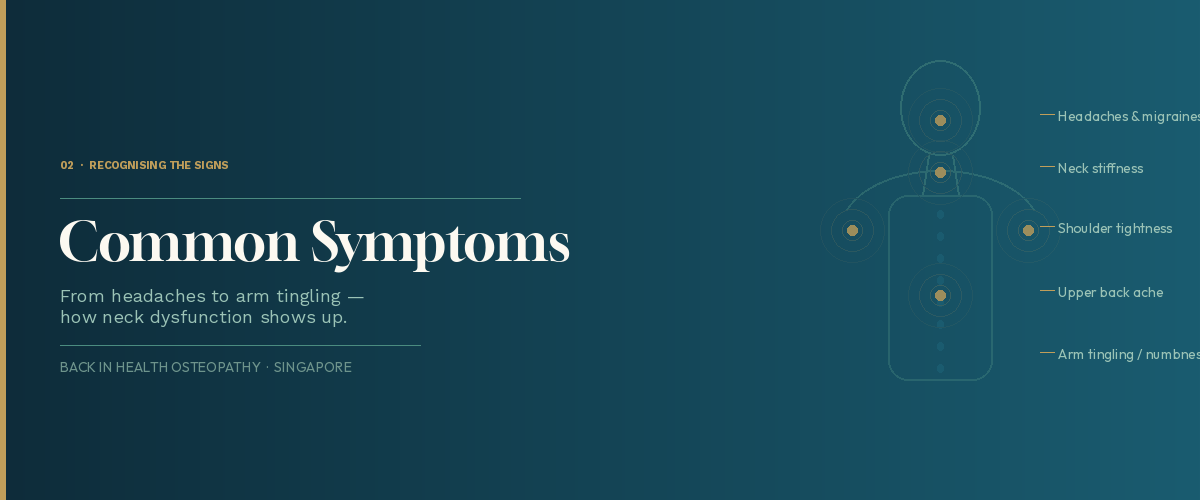
Neck pain doesn't always feel the same from person to person. Here are the most common signs that your neck needs some attention:
Aching or stiffness in the neck and upper back — often worse in the morning or after long periods of sitting. You might notice it's harder to turn your head fully in one or both directions.
Tension headaches — tight neck muscles and restricted joints in the upper cervical spine can refer pain into the back of the head, temples, or even behind the eyes. These are often called cervicogenic headaches, and they're frequently misidentified as migraines.
Shoulder tightness and pain — the muscles that stabilise your neck (particularly the upper trapezius and levator scapulae) connect directly to your shoulders. When they're overworked, the shoulders often bear the brunt of it, too.
Tingling or numbness down the arm — if nerves in your neck are being compressed or irritated by tight muscles or restricted joints, you may feel pins and needles, weakness, or numbness radiating into your arm or fingers. This deserves prompt assessment.
Jaw tension or clicking — the jaw (TMJ) and the upper cervical spine are closely connected neurologically. Neck dysfunction can sometimes contribute to jaw discomfort, and vice versa.
Difficulty concentrating or fatigue — chronic neck pain is genuinely exhausting. When your body is constantly working to manage pain signals, your energy and focus suffer.
Why Neck Pain Keeps Coming Back
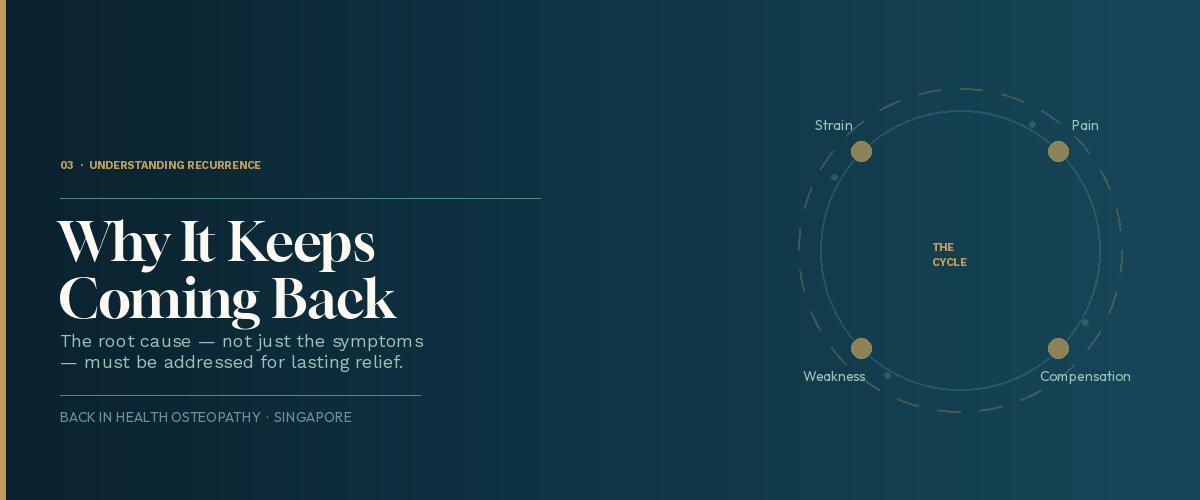
One of the most frustrating things about neck pain is how cyclical it can be. You rest it, it feels better, you go back to work, and within a week, it's back. There are a few reasons for this:
The underlying movement patterns and postural habits that caused the problem in the first place haven't changed. Without addressing the root cause — restricted joints, weakened deep neck flexors, poor thoracic mobility, or habitual forward head posture — symptom relief is only ever temporary.
Additionally, the muscles and joints of the neck don't just hurt in isolation. The whole spine works as an integrated system. Stiffness in the mid-back (thoracic spine) often forces the neck to compensate, creating excess load on structures that aren't built to handle it. Osteopathic assessment looks at these relationships rather than treating the neck as a standalone problem.
How Osteopathy Can Help with Neck Pain
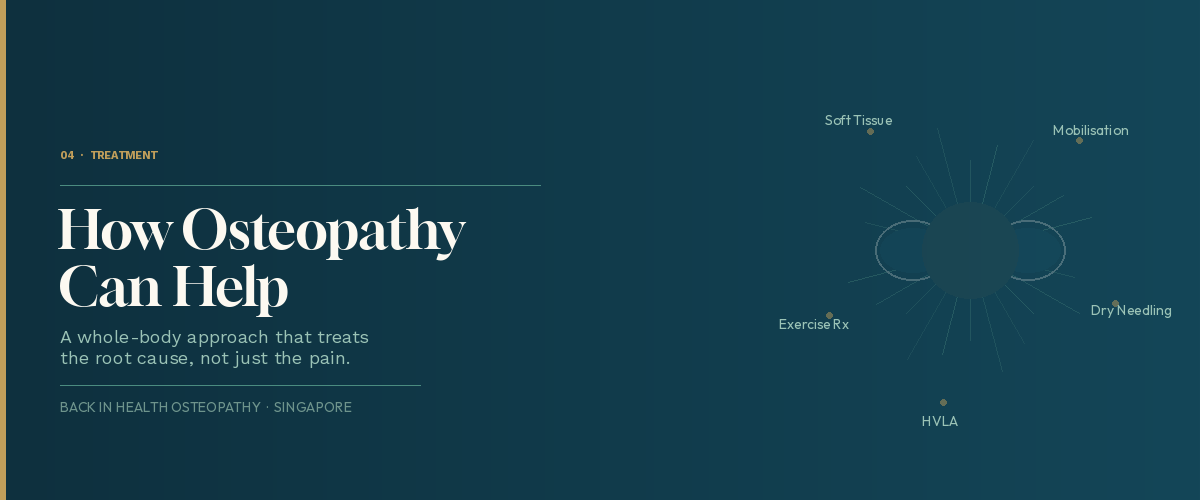
Osteopathy is a form of manual therapy that takes a whole-body approach to diagnosing and treating musculoskeletal pain. Rather than just treating the site of pain, an osteopath looks at how different parts of the body are moving and interacting — and addresses the dysfunctions that are driving your symptoms.
At Back in Health Osteopathy Singapore, our osteopaths commonly use a combination of the following approaches for neck pain:
Soft tissue massage and myofascial release — to release tension in the muscles and fascia around the neck, shoulders, and upper back. This reduces pain and prepares the tissues for joint work.
Joint mobilisation — gentle, rhythmic movements applied to the cervical and thoracic spine to restore normal range of motion and reduce stiffness.
High-velocity low-amplitude (HVLA) manipulation — if appropriate, this technique involves a swift, controlled movement to a restricted joint, often producing the familiar "click" or "pop." It can provide rapid relief from acute stiffness and pain, and is always performed with your consent.
Dry needling — we also offer dry needling at Back in Health, which is highly effective at releasing trigger points (tight, painful "knots") in the neck and shoulder muscles. It can be particularly useful for stubborn, chronic tension.
Exercise prescription and postural advice — treatment in the clinic is only one part of recovery. Our osteopaths will give you specific exercises to strengthen the muscles that support good posture (especially the deep neck flexors and mid-back stabilisers) and practical advice on workstation setup, sleep positions, and daily habits.
What to Expect at Your First Appointment
Your first session at Back in Health Osteopathy Singapore will involve a thorough history and physical assessment. We'll ask about your symptoms, your work setup, your exercise habits, and any relevant medical history. We'll then assess your posture, spinal mobility, muscle strength, and neurological signs to build a clear picture of what's going on.
From there, we'll discuss our findings with you and agree on a treatment plan. Many patients notice meaningful improvement within two to four sessions, though this varies depending on how long the problem has been present and its underlying cause. Chronic issues that have built up over the years naturally take longer to resolve than an acute flare that came on after a particularly brutal week at work.
Simple Things You Can Do Right Now
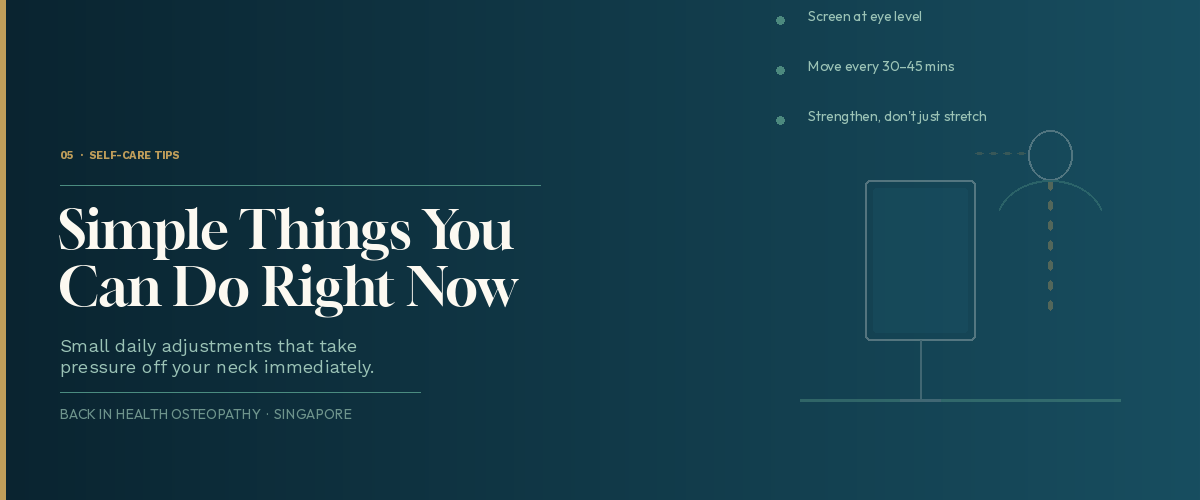
While professional treatment makes a significant difference, there are things you can start doing today to take the pressure off your neck:
Raise your screen height. Your monitor or laptop screen should be roughly at eye level, so your neck is in a neutral position rather than tilting forward or down. If you're working on a laptop, consider an external keyboard and a laptop stand — it's a small investment with a big payoff.
Check your phone posture. Instead of tilting your head down to your phone, try bringing the phone up to eye level. Your neck will thank you.
Move every 30–45 minutes. Set a timer if you need to. Stand up, roll your shoulders, do a few gentle neck rotations. Static postures — even good ones — cause muscles to fatigue and stiffen over time.
Strengthen, don't just stretch. Stretching provides temporary relief, but building strength in the deep neck flexors and the muscles between your shoulder blades gives your neck the structural support it needs to cope with the demands of desk work.
Sleep position matters. If you're a stomach sleeper, try transitioning to your back or side. Sleeping face-down forces your neck into hours of sustained rotation, which can cause significant irritation over time.
When Should You See an Osteopath?
You don't need to be in severe pain to benefit from osteopathic treatment. In fact, the earlier you address neck problems, the quicker and easier the resolution tends to be. That said, we'd recommend booking an assessment if:
- Your neck pain has lasted more than a week and isn't improving
- You're getting headaches that seem to start in the neck
- You have tingling, numbness, or weakness in your arms or hands
- Your neck stiffness is affecting your sleep or your ability to work
- You've tried stretching and rest but the problem keeps returning
Ready to Get Your Neck Sorted?
If neck pain is affecting your work, your sleep, or your quality of life, the team at Back in Health Osteopathy Singapore is here to help. Our experienced osteopaths take the time to properly assess your condition and create a treatment plan that addresses the root cause — not just the symptoms.
📍 Book your appointment online today at www.backinhealth.com.sg/bookings
Don't let neck pain become your new normal. Whether you're dealing with a recent flare-up or a long-standing issue, we'd love to help you get back to health.
Back in Health Osteopathy Singapore offers osteopathy, IDD therapy, shockwave therapy, dry needling, and clinical pilates. To learn more about our services, visit www.backinhealth.com.sg.